Have you ever looked back at a losing trade and wondered, “What did I miss?” Chances are, it wasn’t your strategy—it was your process.
That’s where an options trading checklist comes in. Think of it as a roadmap you follow before every trade. Instead of relying on emotions or gut feelings, you make decisions based on a consistent process.
Professional traders use checklists for the same reason pilots use pre-flight checklists: even experts can overlook important details when they’re in a hurry. A simple pre-trade checklist helps reduce mistakes, improve discipline, and keep you focused on your options trading plan.
Will a checklist make every trade profitable? Of course not. But it can help you avoid many of the preventable errors that cost traders money over the long run.
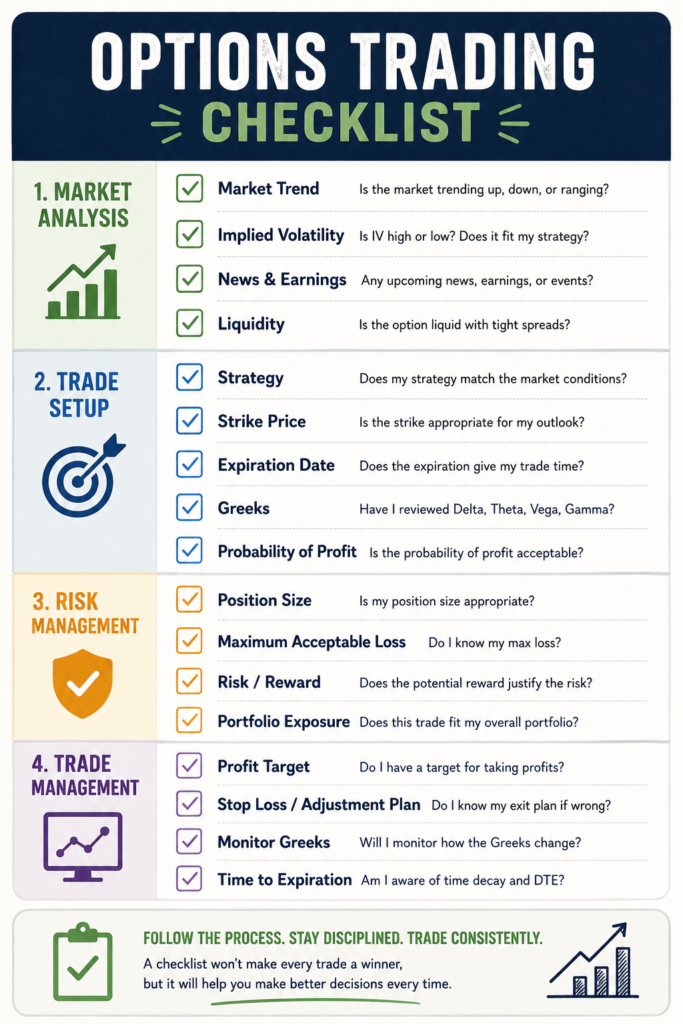
Here’s a simple checklist you can use before placing your next options trade.
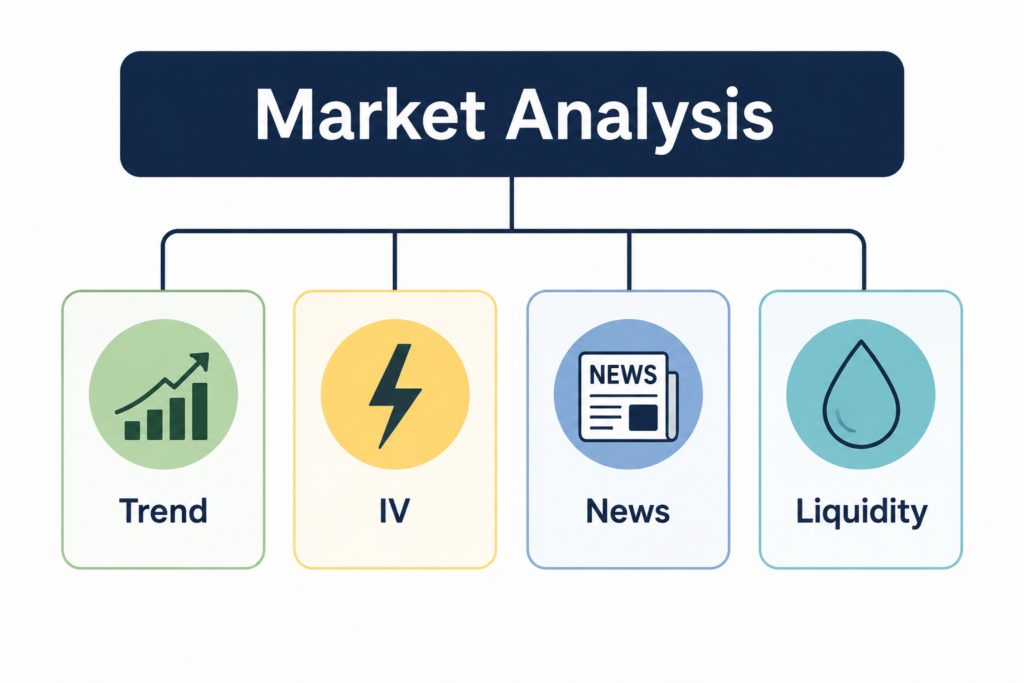
1. Market Analysis Checklist
Before looking at an option contract, look at the market itself.
Is the Market Trending?
The first question is simple: is the stock moving up, down, or sideways?
Different market conditions favor different strategies. Buying calls during a strong uptrend makes much more sense than trying to fight the trend. Likewise, premium-selling strategies often perform better when prices are moving within a range.
You don’t need dozens of indicators to identify a trend. A quick look at the price action or a couple of moving averages is often enough.
Check Implied Volatility
One of the biggest advantages of options trading is that you’re trading both price and volatility.
Implied volatility (IV) tells you how much movement the market expects. When IV is high, option premiums become more expensive. When it’s low, they’re usually cheaper.
As a general rule:
- Buyers often prefer lower IV.
- Sellers often prefer higher IV.
IV shouldn’t determine your trade on its own, but it should always be part of your decision-making process.
Look for News and Earnings
A perfect setup can quickly become a bad trade if a major event is just around the corner.
Before entering any position, check for:
- Earnings announcements
- Federal Reserve meetings
- Inflation reports
- Product launches
- Other major news
These events can create large price swings and significantly affect option prices, especially through changes in implied volatility.
Check Liquidity
Finally, make sure the option is easy to trade.
Look for:
- Tight bid-ask spreads
- High trading volume
- Strong open interest
Liquid options are easier to enter and exit, helping you avoid unnecessary trading costs.
2. Trade Setup Checklist
Once you’ve analyzed the market, it’s time to build the trade.
Does Your Strategy Fit the Market?
Don’t force your favorite strategy into every situation.
If you’re bullish, buying calls may work well. If volatility is high and you expect prices to stay in a range, selling premium could be the better choice.
Always let the market guide your strategy—not the other way around.
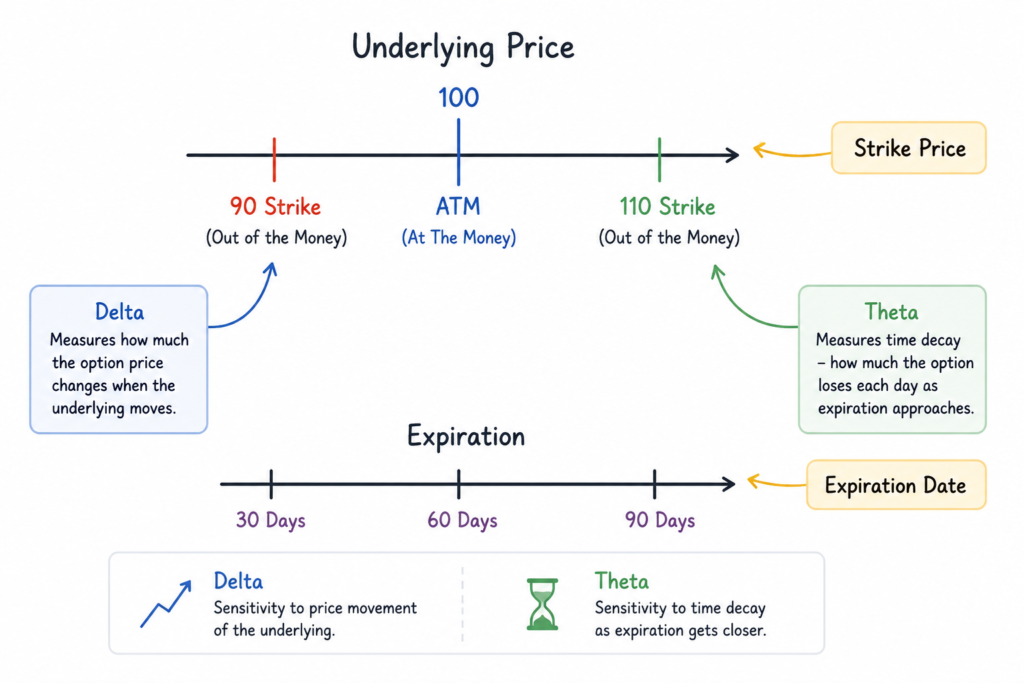
Choose the Right Strike Price
Your strike price should match your objective.
Closer-to-the-money options usually offer higher probabilities of success but cost more.
Further out-of-the-money options are cheaper but require a larger move before becoming profitable.
Neither is automatically better. The right strike depends on your outlook and your level of risk.
Pick the Right Expiration Date
Your expiration date should give your idea enough time to play out.
Too little time means time decay can work against you before the trade has a chance to succeed.
Too much time may simply make the option more expensive than necessary.
Choose an expiration that matches the expected duration of your trade.
Understand the Greeks
You don’t need to calculate the Greeks, but you should understand what they tell you.
- Delta measures how much the option may move when the stock moves.
- Theta measures time decay.
- Vega measures sensitivity to implied volatility.
- Gamma measures how quickly Delta changes.
Checking these values before entering a trade helps you understand the risks you’re taking.
Consider the Probability of Profit
Before clicking “Buy” or “Sell,” ask yourself one final question:
Is this trade actually worth taking?
A trade with a huge potential return isn’t attractive if the chances of success are extremely low.
Successful traders focus on balancing probability, reward, and risk.
3. Risk Management Checklist
Many traders spend hours looking for the perfect setup but only seconds thinking about risk management.
That’s backwards.
Good risk management won’t eliminate losing trades, but it can prevent a few losses from becoming catastrophic.
Position Sizing
Never risk more than you’re comfortable losing on a single trade.
Keeping position sizes small makes it much easier to survive losing streaks and stay emotionally balanced.
Maximum Acceptable Loss
Know your exit before entering the trade.
Whether you use a stop loss or simply decide on a maximum dollar loss, make the decision while you’re thinking clearly—not after the market moves against you.
Risk vs. Reward
Every trade should offer a reasonable balance between the amount you’re risking and the potential reward.
If the downside is much larger than the possible upside, it may be worth looking for a better opportunity.
Portfolio Exposure
Finally, consider your entire portfolio.
Owning several bullish positions on similar stocks may expose you to much more risk than you realize.
Diversification isn’t just about owning different positions—it’s about avoiding too much exposure to the same market movement.
4. Trade Management Checklist
Opening a trade is only the beginning.
The next step is managing it properly.
Before you leave your screen, make sure you know the answers to these questions:
- When will I take profits?
- What will I do if the trade moves against me?
- Should I adjust the position if market conditions change?
- How will changes in the Greeks affect my trade?
- How much time remains until the expiration date?
Having a plan before emotions take over is one of the biggest differences between disciplined traders and impulsive ones.
Conclusion
A good options trading checklist won’t guarantee winning trades, but it will help you make better decisions consistently.
By checking the market, choosing the right setup, following solid risk management, and managing your positions with a clear plan, you’ll avoid many of the mistakes that catch traders off guard.
Most importantly, don’t be afraid to customize your checklist as you gain experience. Every trader develops their own style, and your options trading plan should evolve with it.
The goal isn’t to create the perfect checklist—it’s to create one you’ll actually use before every trade. Over time, that simple habit can make a bigger difference than any indicator or strategy ever will.
Deja una respuesta