If you’ve been thinking about getting into options trading, you’ve probably asked yourself one question:
“Is $1,000 enough?”
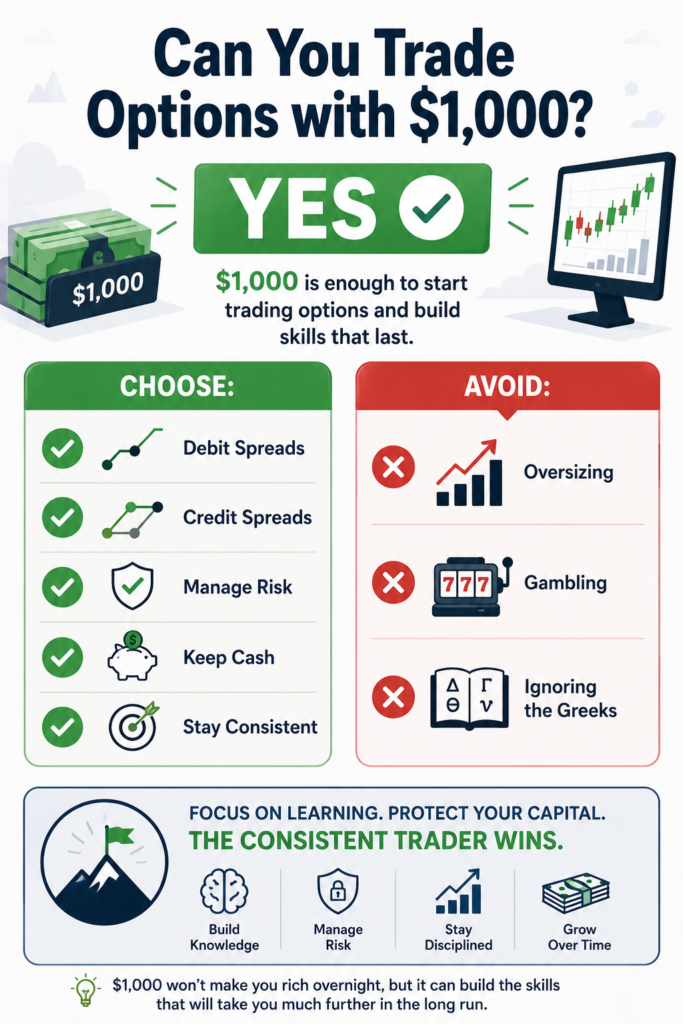
The short answer is yes—you can absolutely start trading options with a $1,000 account.
The longer answer? It depends on your expectations.
A small account won’t let you trade every strategy, and it certainly won’t turn into six figures overnight (despite what some YouTube thumbnails might suggest). But if your goal is to learn, gain experience, and build good trading habits, $1,000 can be more than enough.
In this guide, we’ll look at what you can realistically do with a $1,000 account, which strategies make the most sense, and how to avoid the mistakes that wipe out small accounts.
Can You Trade Options with $1,000?
Yes—you can.
Most brokers don’t require a huge deposit to start trading options. The real limitation isn’t opening the account; it’s how much buying power you actually have.
With a $1,000 account, you’ll quickly notice that some popular options strategies simply aren’t realistic.
For example:
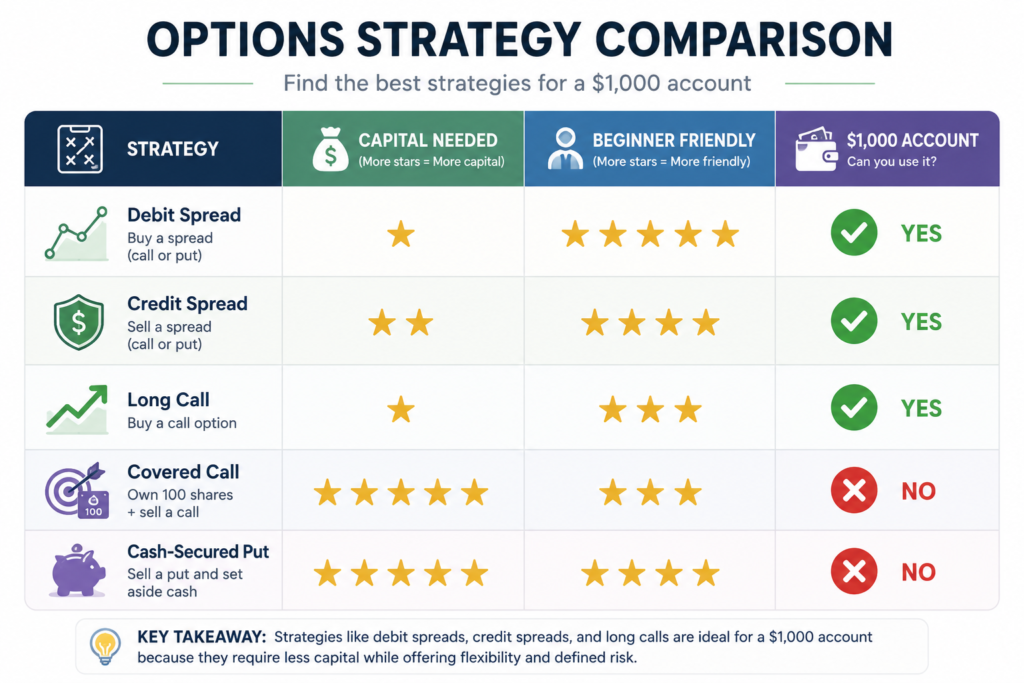
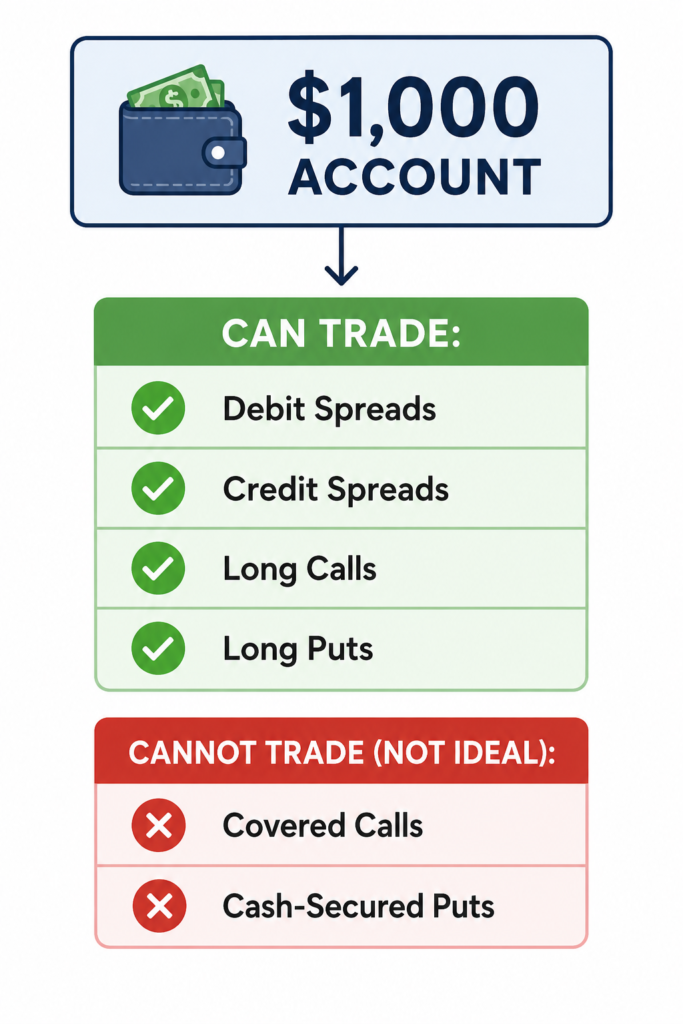
- Selling cash-secured puts often requires thousands—or even tens of thousands—of dollars in collateral.
- Covered calls require owning 100 shares of a stock, which is out of reach for many companies unless you’re trading very low-priced stocks.
That doesn’t mean you’re out of options (pun intended).
Many defined-risk strategies are specifically suited for smaller accounts because they limit both your maximum loss and the amount of capital tied up in each trade. The key is accepting that a small account requires a different approach—not trying to trade like someone managing a $100,000 portfolio
The Best Options Strategies for a $1,000 Account
When your account is small, capital efficiency becomes incredibly important.
Here are some of the strategies worth considering.
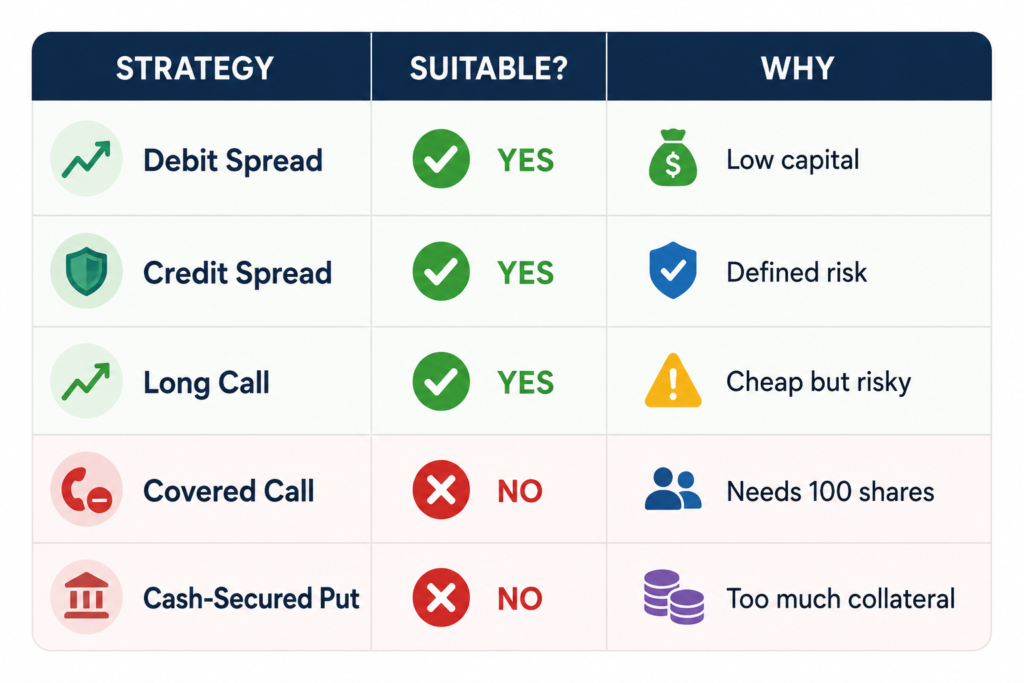
Debit Spreads
Debit spreads are one of the best choices for beginners with limited capital.
Instead of buying an expensive call or put outright, you buy one option and sell another at a different strike price. This lowers the cost of entering the trade while keeping your risk clearly defined.
Pros:
- Lower cost than buying naked options
- Defined maximum loss
- Less affected by time decay than a single long option
Cons:
- Profit is capped
- Requires choosing both strikes carefully
Credit Spreads
Credit spreads are another popular strategy for smaller accounts.
You receive a premium when opening the trade while keeping your maximum risk limited.
Many experienced traders use credit spreads because they offer a good balance between risk and reward without requiring a large amount of capital.
Just remember that “limited risk” doesn’t mean “low risk.” Poor position sizing can still damage a small account.
Buying Calls or Puts
Buying a single call or put is simple and doesn’t require much capital.
However, it’s also one of the easiest ways to lose money if you don’t understand how options work.
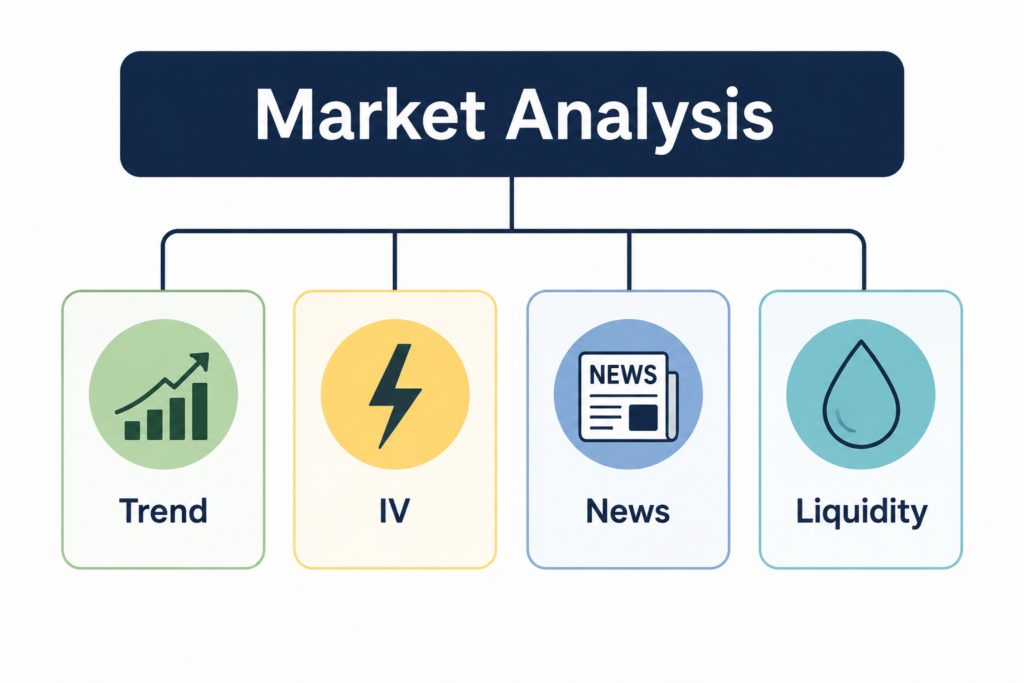
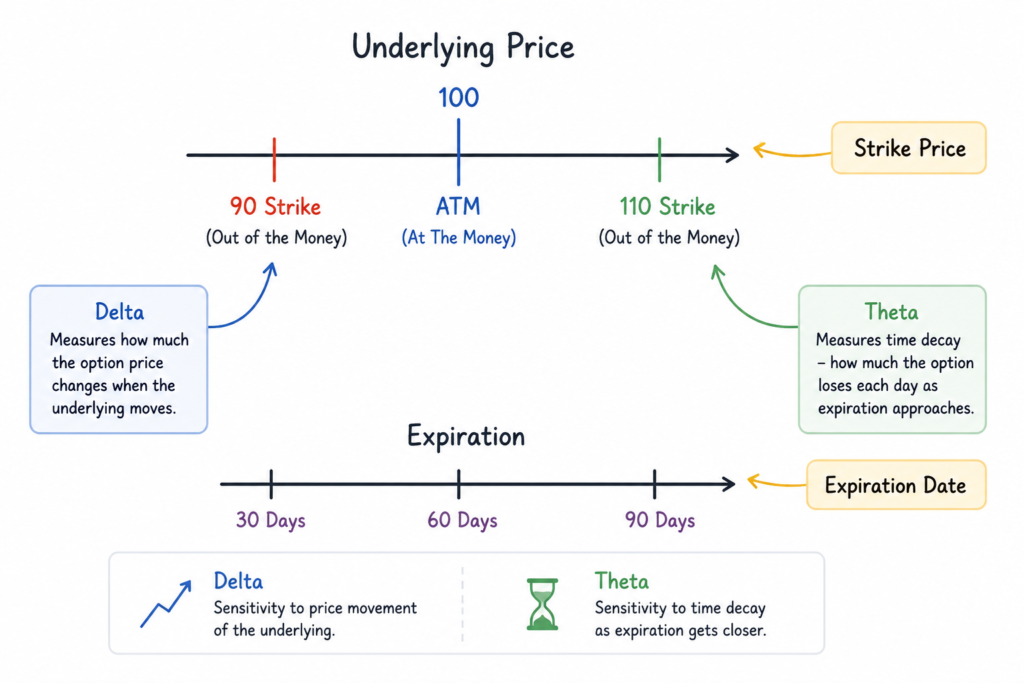
Time decay (Theta) and changes in implied volatility can reduce an option’s value even if the stock moves in the direction you expected.
Long options can certainly be part of your trading plan, but they shouldn’t become lottery tickets.
Strategies That Usually Don’t Fit a $1,000 Account
Some strategies are simply too capital-intensive for most small accounts.
These include:
- Cash-secured puts
- Covered calls on higher-priced stocks
- Multiple contracts on expensive underlyings
As your account grows, these strategies become more realistic. There’s no rush to trade them on day one.
How to Manage Risk with a Small Account
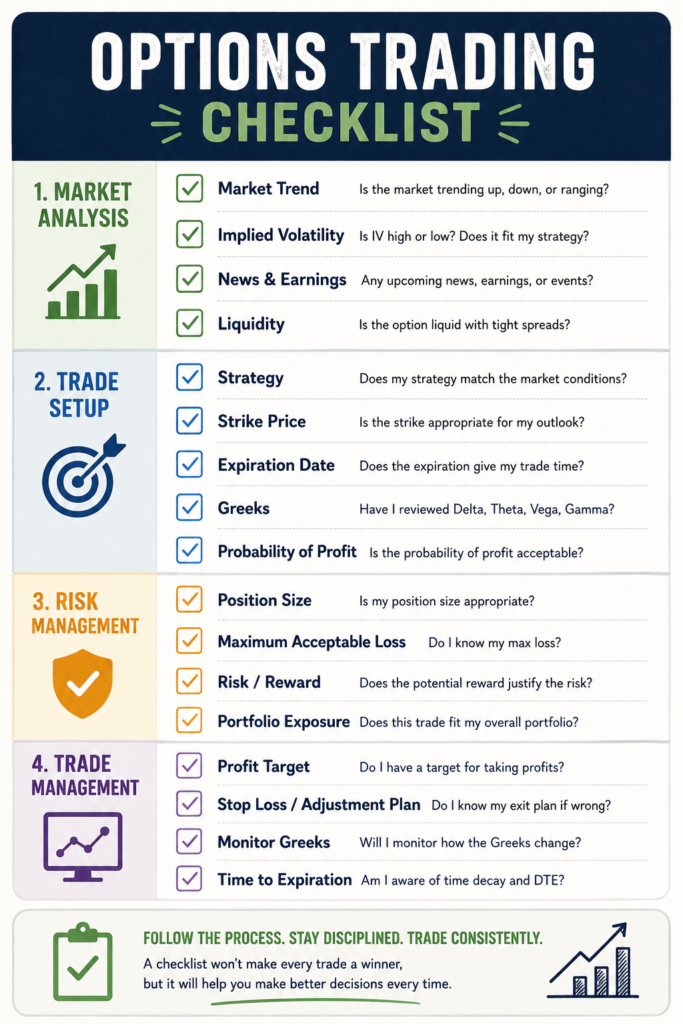
If there’s one thing that separates traders who survive from those who blow up their accounts, it’s risk management.
A $1,000 account leaves very little room for large mistakes.
Here are a few simple rules worth following.
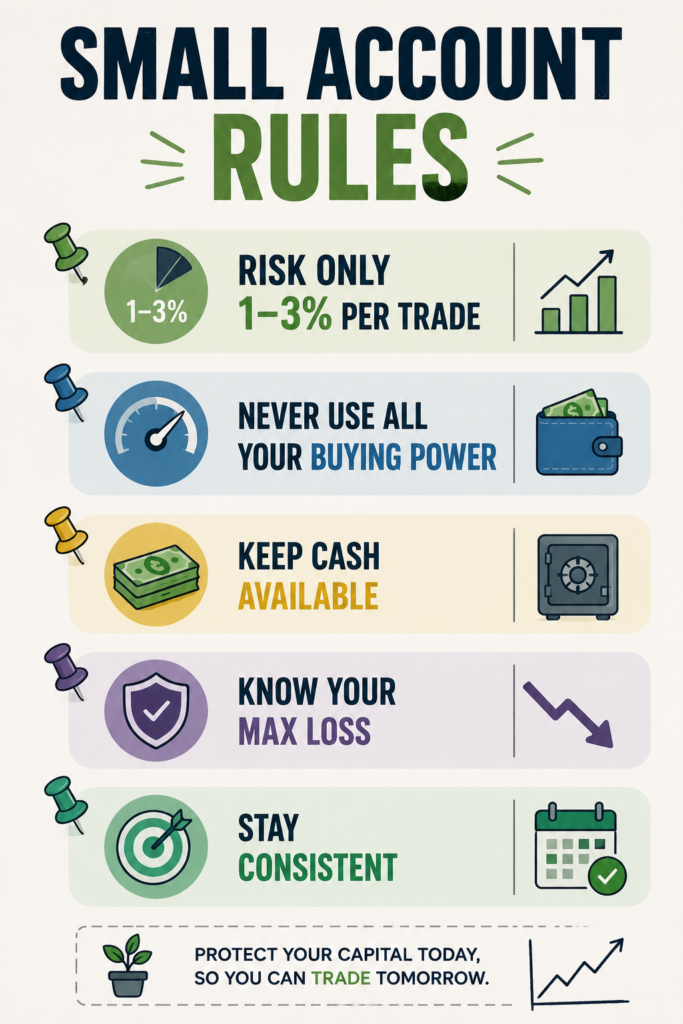
Keep Your Position Sizes Small
Avoid putting half of your account into a single trade.
A good rule of thumb is to risk only a small percentage of your account on any one position.
Losing trades are part of trading. Your goal is to make sure one bad trade doesn’t end your journey.
Know Your Maximum Loss Before Entering
Every trade should have a predefined maximum loss.
If you don’t know exactly how much you could lose before clicking the buy button, you’re probably taking too much risk.
Defined-risk strategies like spreads make this much easier.
Always Keep Some Cash Available
You don’t need to have every dollar invested.
Keeping part of your account in cash gives you flexibility.
It also helps you avoid forcing trades just because your money is already committed.
Sometimes the best trade is waiting for a better opportunity.
A Sample $1,000 Options Trading Plan
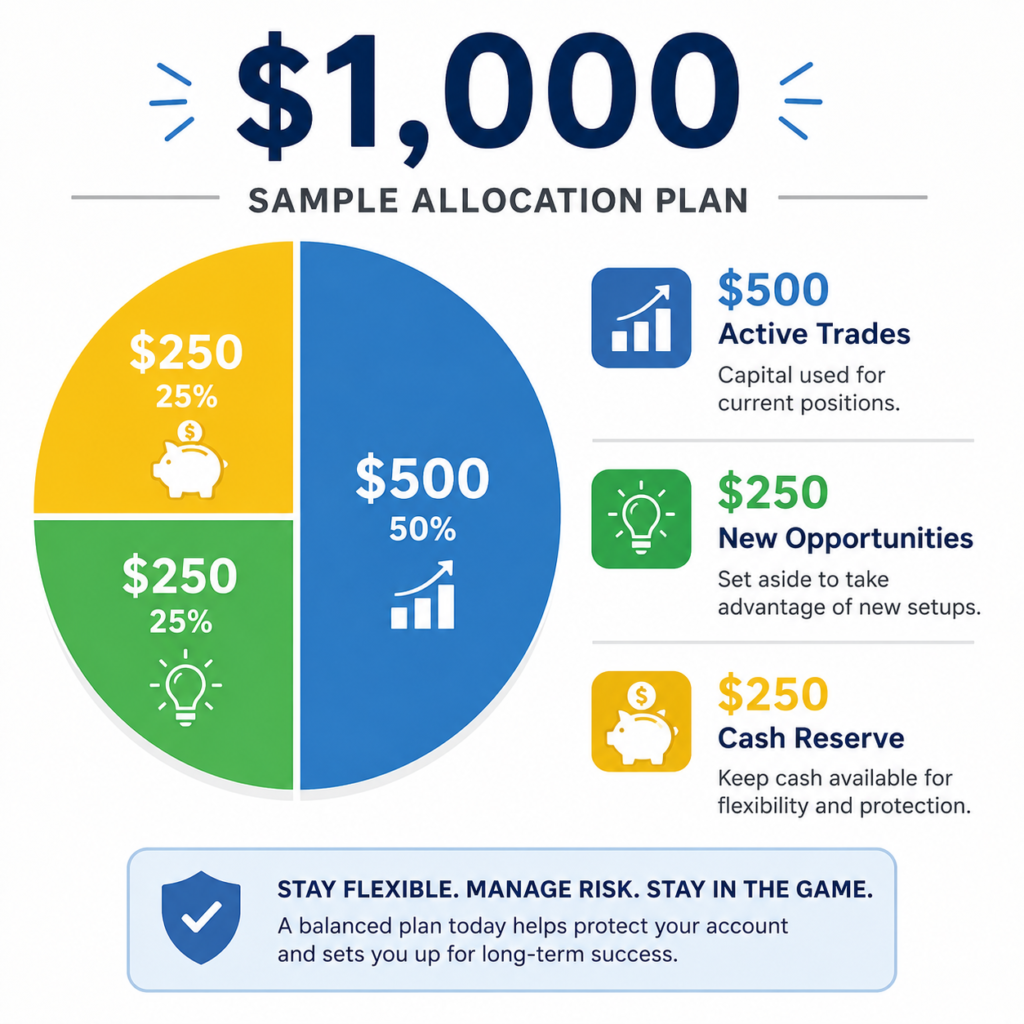
Every trader has a different style, but here’s an example of how someone might structure a small account.
| Allocation | Amount |
| Active positions | $500 |
| New opportunities | $250 |
| Cash reserve | $250 |
Instead of opening five or six trades at once, you might focus on just one or two high-quality setups.
For example:
- One credit spread on a liquid ETF
- One debit spread on a strong trending stock
- Keep cash available in case a better opportunity appears
The goal isn’t to stay busy.
The goal is to stay disciplined.
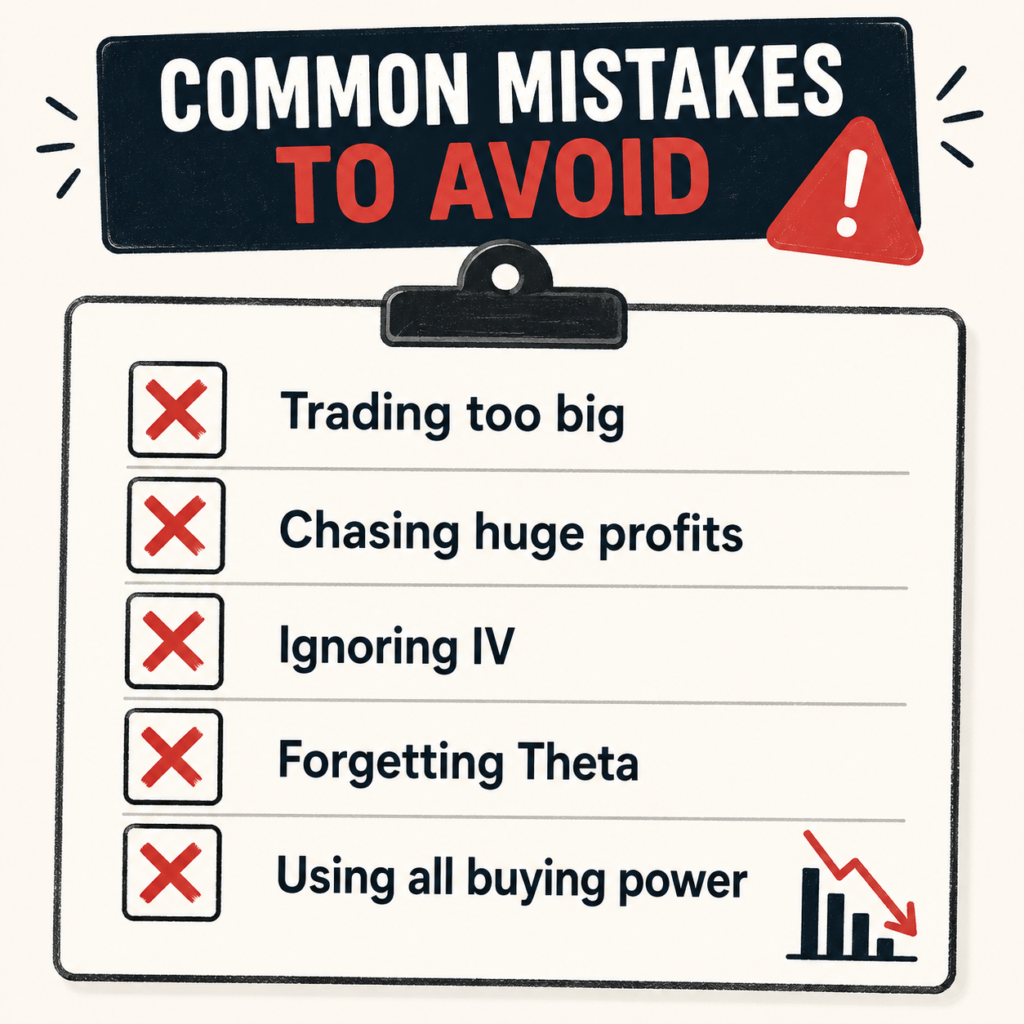
Common Mistakes to Avoid
Small accounts don’t leave much room for expensive lessons.
Here are some of the biggest mistakes new traders make.
Risking Too Much on One Trade
One losing trade shouldn’t wipe out weeks—or months—of progress.
If one position can destroy your account, it’s simply too large.
Trying to Get Rich Quickly
Doubling your account in a month sounds exciting.
It’s also one of the fastest ways to lose it.
Focus on consistency instead of huge wins.
Small gains repeated over time usually beat chasing home runs.
Trading Strategies That Require More Capital
Just because you can technically open a trade doesn’t mean it’s the right trade for your account.
Choose strategies that match your available capital—not your future goals.
Ignoring Implied Volatility and Time Decay
Many beginners only look at the stock price.
Experienced options traders know there’s much more going on.
An option’s price is influenced by implied volatility, Theta, and other Greeks—not just whether the stock goes up or down.
Learning these concepts early will save you plenty of frustration later.
Conclusion
So, can you trade options with $1,000?
Absolutely.
Will you become a full-time trader overnight?
Probably not.
A $1,000 account is best viewed as a learning account—a place to develop your skills, test your strategies, and build confidence without risking life-changing amounts of money.
As your knowledge and discipline grow, your account can grow too.
Remember, successful options trading isn’t about starting with the biggest account.
It’s about making smart decisions, managing risk, and staying consistent over the long run.
After all, protecting your capital is what gives you the chance to trade another day.